Easter Monday in Bulgaria: Tradition and Family Visits
Orthodox Easter Monday is the day following Easter Sunday and is observed across Bulgaria as part of the wider Easter celebration within the Orthodox Christian tradition
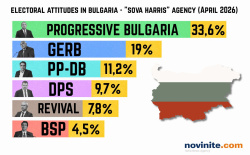
HOT: » Which party would you vote for (if you could) in the upcoming snap vote in Bulgaria on April 19?
 Send to Kindle
 Residential properties' prices in Bulgaria went down nearly 6% in the first quarter of 2011, compared to the same period of 2010. File photo
Bulgaria's real estate market is ranked sixth in the world by the property price drop in the first quarter of 2011, according to a study of the global property services and research company Knight Frank.
To follow the price trend in Bulgaria, Knight Frank have used data of the Bulgarian National Statistics Institute, NSI, showing that residential properties' prices went down nearly 6% in the first quarter of 2011, compared to the same period of 2010. On quarterly basis, the decrease is 2.3% and it is nearly 4% on six-month basis.
The study ranks Bulgaria 6th by the property price drop, after Russia, Ireland, Dubai, the Ukraine and Greece.
Russia has registered a drop of 14%, Ireland – 12%; Dubai – over 8%, the Ukraine – 7.5% and Greece – 5.7%.
On the other end, Asian markets show a strong property price growth, led by Hong-Kong with a price increase of 24.4%, followed by India – 22%, Taiwan – 14%, and Israel with a 12% more expensive residential properties on annual basis in the first quarter of 2011.
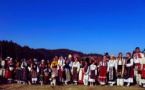
Orthodox Easter Monday is the day following Easter Sunday and is observed across Bulgaria as part of the wider Easter celebration within the Orthodox Christian tradition

Industrial output in Bulgaria posted a modest monthly increase in February 2026, but continued to decline sharply on an annual basis, according to preliminary, seasonally adjusted data from the National Statistical Institute.

The president of the Confederation of Bulgarian Trade Unions, Plamen Dimitrov, has warned that inflation in Bulgaria is likely to exceed earlier projections, even if fuel prices begin to decline

The introduction of the euro in Bulgaria has so far produced only a limited and largely one-off effect on consumer prices, according to an analysis by the European Central Bank
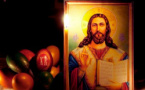
Easter is the most important religious holiday in the Orthodox Christian calendar and is widely celebrated across Bulgaria. It marks the resurrection of Jesus Christ and follows the completion of Holy Week, which includes Good Friday and Holy Saturday

Holy Saturday, known in Bulgaria as Lazarus Saturday’s continuation of the Easter cycle, is a quiet but deeply symbolic day in the Orthodox Christian calendar

Housing prices in Bulgaria have surged by 157% between 2015 and the end of 2025

The Bulgarian real estate market is showing signs of cooling in early 2026, with experts reporting a slowdown in transactions and a shift toward more balanced conditions between buyers and sellers

In 2026 the Bulgarian residential market is shaped less by size and more by adaptability.
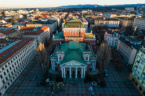
Bulgaria’s entry into the Eurozone marks a defining moment for the country’s real estate sector.

The housing market in Bulgaria is undergoing notable shifts, with buyers increasingly prioritizing location and accessibility over sheer size.

Property values in Sofia have surged by approximately €500 per square metre over the past year, according to data from one of Bulgaria’s largest real estate agencies. Across the country’s main cities, housing costs climbed by 20% in the final quarter of 2

Aniventure Comic Con Returns to Bulgaria with Star Guest Christopher Judge!

Global Fuel Shock: Oil Jumps Over 40% Since Iran War Began