Putin Declares Easter Ceasefire in Ukraine War
The Kremlin has announced that Russian President Vladimir Putin has ordered an “Easter ceasefire” in the war in Ukraine, declaring a temporary halt in hostilities lasting around 36 hours
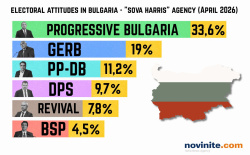
HOT: » Which party would you vote for (if you could) in the upcoming snap vote in Bulgaria on April 19?
 Send to Kindle
Russian Energy Minister Sergey Shmatko has renewed calls for Bulgaria to take measures in order to push ahead the project for the construction of the Burgas-Alexandroupolis oil pipeline.
Shmatko spoke in Moscow late Wednesday night after chairing together with Bulgarian Minister of Economy, Energy, and Tourism Traicho Traikov a session of the Bulgarian-Russian commission for economic cooperation.
Shmatko made it clear, as cited by ITAR-TASS, that expects for Bulgaria to make soon an official decision on the fate of the Burgas-Alexandroupolis oil pipeline project.
"The decision about the project's future should be made as soon as possible. Bulgaria showed understanding that there is a need to reach the final stage and make final decisions soon. For yet another time I call for Bulgaria to push the work on this project," Shmatko said pointing out that the future cooperation between Bulgaria and Russia will be strongly influenced by the fate of the existing agreements.
Bulgarian Economy Minister Traikov has retorted that Bulgaria has always observed its international contracts, and that at the moment his country is examining the environment impact assessment of the BA pipeline.
The new Russian push for the Burgas-Alexandroupolis oil pipeline comes a week after Bulgaria's Environment Ministry gave the Trans-Balkan Pipeline company two more months to complete its report on the environmental impact of the Burgas-Alexandroupolis oil pipeline.
The environmental impact report of the proposed Burgas-Alexandroupolis oil pipeline was tabled to the Bulgarian government in late February, and the Cabinet was supposed to make a decision on whether the pipeline will be built or not by March 31.
However, last week Bulgarian Environment Minister Nona Karadzhova made it clear that the TBP report had serious deficiencies, and the government would give the project company two more months to complete its report. She stressed the concerns of the population in Southeast Bulgaria over the potential construction and operation of the Burgas-Alexandroupolis pipeline.
Earlier in March, the Russian-sponsored oil pipeline project ran into further trouble as Bulgaria failed once again to pay its dues to the joint venture for its construction of the Burgas-Alexandroupolis oil pipeline.
On February 17, 2011, a joint general meeting of the Shareholders and the Supervisory Board of Trans-Balkan Pipeline B.V. (ТВР), the Bulgarian-Greek-Russian company, held in Rome, Italy, gave the Bulgarian government March 20 as a deadline to settle all of its dues for the Burgas-Alexandroupolis oil pipeline.
Even though back then all of the Company's shareholders, including the Bulgarian state, supported the idea that the project should be continued, including the revision of the Environmental and Social Impact Assessment (ESIA), according to the comments made by the Bulgarian Ministry of Environment and Water, Bulgaria failed once again to pay the EUR 7.3 M it owes to the budget of the joint venture.
Mikhail Barkov, Chairman of TBP's Supervisory Board, as quoted by RIA Novosti, commented on Monday, March 21, that the TBP company will have to go into a hibernation mode as neither Greece, nor Russia will pay any more for the project as Bulgaria is constantly refusing to do so.
Meanwhile, Greek Deputy Foreign Minister Spyros Kouvelis revealed that Greece has been exerting pressure on Bulgaria for the construction of the Burgas-Alexandroupolis pipeline but that it is blocked by the Borisov government for political reasons.
Trans-Balkan Pipeline B.V. was registered on February 6, 2008, in Amsterdam (the Netherlands) in implementation of the tripartite agreement between the Governments of Russia, Bulgaria, and Greece on the construction and operation of the Burgas-Alexandroupolis oil pipeline, signed in Athens (Greece) on March 15, 2007.
According to the Russian reports, Bulgaria owes EUR 7.3 M as a contribution to the budget of the joint project company; in December 2010, there were concerns by Russia that Bulgaria wants to kill the project by defaulting on its dues. A senior Greek government official commented at the time that Bulgaria was moving to shed the oil pipeline under pressure by American oil interests.
The Burgas-Alexandroupolis oil pipeline – one of the three major Bulgarian-Russian energy projects – appears to have run into much disrepute with the Bulgarian government in 2010.
Ever since the center-right government of Bulgarian Prime Minister Boyko Borisov took office in the summer of 2009, it has been balking at the construction of the Burgas-Alexandroupolis oil pipeline, which had been promoted vigorously by the formed Socialist-led Stanishev Cabinet and the Socialist President of Bulgaria, Georgi Parvanov. It has also been met with staunch resistance along Bulgaria's southern Black Sea coast over environmental concerns.
In November 2010, the Bulgarian Environment Ministry said the environmental impact assessment of the Burgas-Alexandroupolis oil pipeline is inadequate and needs to be reworked; the ultimate decision about whether Bulgarian will take part in the project has been put off for 2011. Bulgarian Prime Minister Borisov, however, has written off the project on a number of occasions, declaring that there is no way the ultimate environmental assessment would be positive.
Bulgaria, Greece and Russia agreed to build the pipeline between Burgas and Alexandroupolis, taking Caspian oil to the Mediterranean skirting the congested Bosphorus, in 2007 after more than a decade of intermittent talks.
The 280-km pipeline, with 166 km passing through Bulgaria, would have an initial annual capacity of 35 million tons of crude oil, which could be later expanded to 50 million tons. Its costs are estimated at up to USD 1.5 B, up from initial estimates at USD 900 M.
The Trans-Balkan Pipeline company, which is in charge of the construction and subsequent operation of the future pipeline, and is headquartered in the Netherlands, was set up in 2008.
The Russian participant in the project, Pipeline Consortium Burgas-Alexandroupolis Ltd, has a share of 51%. It was founded jointly by three companies: AK Transneft (33.34%), NK Rosneft (33.33%), and Gazrpom Neft (33.33%).
The Bulgarian Joint stock company "Project Company Oil Pipeline Burgas-Alexandroupolis – BG" AD has a share of 24.5%. It was initially founded as jointly by two state companies, Bulgargaz (50%) and Technoexportstroy (50%) but was transferred in full to the Finance Ministry in February 2010.
The Greek participants are Helpe Thraki AE with 23.5% and the Greek government with 1%. The Helpe-Thraki AE was founded jointly by "Hellenic Petroleum" (25%) and "Thraki" (75%).
Three Bulgarian Black Sea municipalities - Burgas, Pomorie, and Sozopol - have voted against the pipe in local referendums over environmental concerns.

The Kremlin has announced that Russian President Vladimir Putin has ordered an “Easter ceasefire” in the war in Ukraine, declaring a temporary halt in hostilities lasting around 36 hours
A group of Members of the European Parliament has raised concerns over the potential leakage of confidential EU information to Russia, urging stronger safeguards within the European Parliament

A criminal network linked to Bulgaria has been accused of defrauding dozens of elderly people in northern Greece through an elaborate telephone scam that resulted in losses exceeding 600,000 euros, according to Kathimerini.
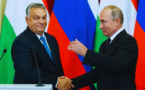
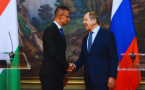
A leaked transcript of a phone call between Hungarian Prime Minister Viktor Orban and Russian President Vladimir Putin shows Orban offering extensive support to Moscow and describing himself as ready to help “in any way” in relation to the war in Ukraine

The United States is expanding shipments of liquefied natural gas to Southeast Europe and Ukraine via Greece, according to remarks by the US Ambassador to Athens, Kimberly Guilfoyle
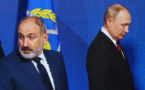
Vladimir Putin stated that Armenia cannot realistically pursue membership in the European Union while remaining part of the Moscow-led Eurasian Economic Union, arguing that the two frameworks are fundamentally incompatible
Bulgaria’s fuel market has recorded a sharp upward shift since the outbreak of the war in Iran, with diesel and petrol prices rising significantly across the country
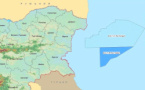
The second exploration drilling in the Krum-1 area of the Khan Asparuh block in Bulgaria’s Black Sea has also failed to identify commercially significant natural gas deposits, according to OMV Petrom

The Ombudswoman institution has voiced strong opposition to the proposed increase in heating prices in Sofia, which is expected to approach nearly 30 percent
The Energy and Water Regulatory Commission (EWRC) in Bulgaria has set the price of natural gas for April 2026 at 34.27 euros per megawatt-hour, excluding access, transmission, excise duties and VAT

Fuel prices in Bulgaria have recorded a sharp upward movement over the past month, with diesel showing the most significant increase, according to data from the Fuelo platform
Bulgargaz has defended its previously submitted proposal for a 5% rise in natural gas prices for April before the Energy and Water Regulatory Commission, with CEO Veselin Sinabov stressing that there is currently no justification for any further increases

Aniventure Comic Con Returns to Bulgaria with Star Guest Christopher Judge!
Global Fuel Shock: Oil Jumps Over 40% Since Iran War Began