Easter Monday in Bulgaria: Tradition and Family Visits
Orthodox Easter Monday is the day following Easter Sunday and is observed across Bulgaria as part of the wider Easter celebration within the Orthodox Christian tradition
HOT: » Which party would you vote for (if you could) in the upcoming snap vote in Bulgaria on April 19?
 Send to Kindle
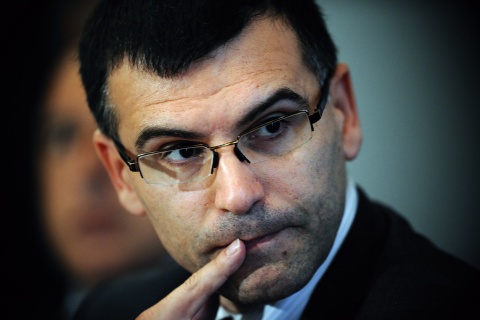 "Our calculations show that for covering the deficit in 2011, we don't need any additional financing. We have enough reserves," Finance Minister Simeon Djankov said in Brussels. Photo by EPA/BGNES
Bulgaria is likely to abandon plans to sell bonds on the international market in 2011, deeming outside financing unnecessary after the economy returned to growth, the finance minister has said.
"We will not go to the Eurobond market this year, simply because we ended 2010 with a larger fiscal reserve than forecast," Simeon Djankov said in an interview for Bloomberg agency in Brussels.
"Our calculations show that for covering the deficit in 2011, we don't need any additional financing. We have enough reserves."
The government had planned to sell bonds amounting to EUR 1 B on the international market in 2011 to shore up its finances.
According to Djankov however a pickup in economic growth in the fourth quarter has helped raise revenue and add to fiscal reserves.
Bulgaria is recovering, though sluggishly, from a deep recession, in which it plunged with the onset of the global economic crisis last year.
The economy expanded 2.1% in the fourth quarter from a year earlier, preliminary data of the statistics office showed at the beginning of the week. The country's gross domestic product (GDP) increased by 0.3% in 2010 as a whole, below government forecasts for growth of 0.7%.
After growing by more than 6% in 2004-2008, the Bulgarian economy shrank by 4.9% in 2009, and is expected register a growth around 0% in 2010 (-0.1%, according to a recent forecast of the EC).
The government has vowed to stick to its tight fiscal policy, which means pursuing doggedly its ambition to halve the budget deficit to 2.5% of GDP and aim at growth of 3.6% in 2011.
"We'd like to wait and see what happens in the first three quarters of this year," Djankov said. "If the economy picks up as we have predicted, then outside financing is not necessary."
Unlike its neighbors Bulgarians were spared radical austerity programs, which could help the economy pick up, driven by rising exports and a debt-to-GDP ratio of just about 16%.
Djankov's belt-tightening policy however has repeatedly drawn criticism of creating the illusion of a healthy economy on the back of the people, who are three times poorer than the average EU citizen.
Local analysts and Brussels experts have warned that the cabinet, just like its predecessors, may loosen the purse strings to maintain its popularity ahead of local and presidential polls in the autumn.

Orthodox Easter Monday is the day following Easter Sunday and is observed across Bulgaria as part of the wider Easter celebration within the Orthodox Christian tradition

Industrial output in Bulgaria posted a modest monthly increase in February 2026, but continued to decline sharply on an annual basis, according to preliminary, seasonally adjusted data from the National Statistical Institute.
The president of the Confederation of Bulgarian Trade Unions, Plamen Dimitrov, has warned that inflation in Bulgaria is likely to exceed earlier projections, even if fuel prices begin to decline

The introduction of the euro in Bulgaria has so far produced only a limited and largely one-off effect on consumer prices, according to an analysis by the European Central Bank

Easter is the most important religious holiday in the Orthodox Christian calendar and is widely celebrated across Bulgaria. It marks the resurrection of Jesus Christ and follows the completion of Holy Week, which includes Good Friday and Holy Saturday

Holy Saturday, known in Bulgaria as Lazarus Saturday’s continuation of the Easter cycle, is a quiet but deeply symbolic day in the Orthodox Christian calendar

The Ministry of Finance has released a broad public dataset covering more than 7,000 public procurement contracts with a combined value exceeding 30 billion euros
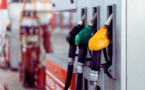
Caretaker Finance Minister Georgi Klisurski said he expects fuel prices at gas stations to ease in the coming period, pointing to a sharp decline in international oil markets
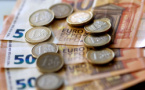
Bulgaria’s new government borrowing for 2026 has surpassed the 1 billion euro mark following the latest successful auction of state securities, according to data cited from the Bulgarian National Bank

Bulgaria recorded only a modest and one-off increase in inflation following the adoption of the euro on January 1, with the effect estimated at between 0.3 and 0.4 percentage points

Data released by the Ministry of Finance, covering budget execution for February 2026 and preliminary estimates for March 2026, indicate a marked deterioration in Bulgaria’s fiscal position

In the 2026 edition of the Index of Economic Freedom, compiled by the Heritage Foundation, Bulgaria is placed 38th out of 176 countries, positioned between Costa Rica and Oman

Aniventure Comic Con Returns to Bulgaria with Star Guest Christopher Judge!
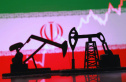
Global Fuel Shock: Oil Jumps Over 40% Since Iran War Began