Easter Monday in Bulgaria: Tradition and Family Visits
Orthodox Easter Monday is the day following Easter Sunday and is observed across Bulgaria as part of the wider Easter celebration within the Orthodox Christian tradition
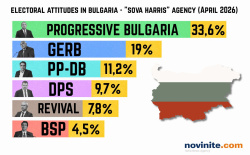
HOT: » Which party would you vote for (if you could) in the upcoming snap vote in Bulgaria on April 19?
 Send to Kindle
The project for the construction of the Burgas-Alexandroupolis oil pipeline is expected to be terminated because Bulgarian shareholders have not performed their financial obligations.
The statement was made Wednesday by Plamen Rusev, ex-director of Bulgarian branch of the project company, Trans-Balkan Pipeline, the joint Bulgarian-Greek-Russian venture that should construct and manage the pipe, the Bulgarian National Radio reported.
"I can confirm that the project is going to an end and this is a good outcome at present because Bulgaria's failure to pay its obligations has created tension between shareholders, As a result, Greece stopped paying its obligations too. You cannot have only one side paying. There has to be a balance," Rusev said.
He added that the final decision on the future of Burgas-Alexandroupolis will be made at a meeting of all shareholders in Rome on February 17.
According to Rusev, the direct damages for Bulgaria at this moment are about BGN 15-20 M, as the obligations of the Bulgarian shareholders are. The money would have to be paid by the Bulgarian Finance Ministry, since it has taken the responsibility for the project.
The indirect damages cannot be calculated, according to the ex-director of Trans-Balkan Pipeline. He said that the other countries might demand compensations over Bulgaria's violation of the international agreement, which could reach up to BGN 200-300 M.
"The most unpleasant thing is that Bulgaria has already lost about EUR 800 M," Rusev said.
Bulgaria's Economy Minister Traicho Traikov has stated he did not know anything about Russia writing off the project. He said, however, that in his opinion Russia is trying to pressure Bulgaria with regards to the Belene nuclear power plant project.
In December 2010, Mikhail Barkov, Vice President of the Russian oil company Transneft, said that Bulgaria has failed to pay the EUR 6 M that it owes as its contribution to the joint project company with Greece and Russia, but it has pledged to pay its dues by December 15, 2010.
Experts have stated that Bulgaria might escape paying compensations if it withdraws the project on the basis of a negative environmental assessment.
In November 2010, the Bulgarian Environment Ministry said the environmental impact assessment of the Burgas-Alexandroupolis oil pipeline is inadequate and needs to be reworked; the ultimate decision about whether Bulgarian will take part in the project is expected after the results of the environmental assessment, which is to be revealed in February 2011.
Bulgarian Prime Minister Boyko Borisov, however, has written off the project on a number of occasions, declaring that there is no way the ultimate environmental assessment would be positive.
The 280-km pipeline, with 166 km passing through Bulgaria, would have an initial annual capacity of 35 million tons of crude oil, which could be later expanded to 50 million tons. Its costs are estimated at up to USD 1.5 B, up from initial estimates at USD 900 M.
The Trans-Balkan Pipeline company, which is in charge of the construction and subsequent operation of the future pipeline, and is headquartered in the Netherlands, was set up in 2008.
The Russian participant in the project, Pipeline Consortium Burgas-Alexandroupolis Ltd, has a share of 51%. It was founded jointly by three companies: AK Transneft (33.34%), NK Rosneft (33.33%), and Gazrpom Neft (33.33%).
The Bulgarian Joint stock company "Project Company Oil Pipeline Burgas-Alexandroupolis – BG" AD has a share of 24.5%. It was initially founded as jointly by two state companies, Bulgargaz (50%) and Technoexportstroy (50%) but was transferred in full to the Finance Ministry in February 2010.
The Greek participants are Helpe Thraki AE with 23.5% and the Greek government with 1%. The Helpe-Thraki AE was founded jointly by "Hellenic Petroleum" (25%) and "Thraki" (75%).
Three Bulgarian Black Sea municipalities - Burgas, Pomorie, and Sozopol - have voted against the pipe in local referendums over environmental concerns.
Municipalities neighboring Pomorie and nearby Burgas are also harboring fears that the pipeline could damage their lucrative tourism business, while environmental NGOs have branded the existing plans to build an oil terminal out at sea a disaster waiting to happen.

Orthodox Easter Monday is the day following Easter Sunday and is observed across Bulgaria as part of the wider Easter celebration within the Orthodox Christian tradition

Industrial output in Bulgaria posted a modest monthly increase in February 2026, but continued to decline sharply on an annual basis, according to preliminary, seasonally adjusted data from the National Statistical Institute.

The president of the Confederation of Bulgarian Trade Unions, Plamen Dimitrov, has warned that inflation in Bulgaria is likely to exceed earlier projections, even if fuel prices begin to decline

The introduction of the euro in Bulgaria has so far produced only a limited and largely one-off effect on consumer prices, according to an analysis by the European Central Bank

Easter is the most important religious holiday in the Orthodox Christian calendar and is widely celebrated across Bulgaria. It marks the resurrection of Jesus Christ and follows the completion of Holy Week, which includes Good Friday and Holy Saturday

Holy Saturday, known in Bulgaria as Lazarus Saturday’s continuation of the Easter cycle, is a quiet but deeply symbolic day in the Orthodox Christian calendar

Bulgaria’s fuel market has recorded a sharp upward shift since the outbreak of the war in Iran, with diesel and petrol prices rising significantly across the country
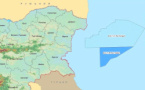
The second exploration drilling in the Krum-1 area of the Khan Asparuh block in Bulgaria’s Black Sea has also failed to identify commercially significant natural gas deposits, according to OMV Petrom

The Ombudswoman institution has voiced strong opposition to the proposed increase in heating prices in Sofia, which is expected to approach nearly 30 percent
The Energy and Water Regulatory Commission (EWRC) in Bulgaria has set the price of natural gas for April 2026 at 34.27 euros per megawatt-hour, excluding access, transmission, excise duties and VAT

Fuel prices in Bulgaria have recorded a sharp upward movement over the past month, with diesel showing the most significant increase, according to data from the Fuelo platform

Bulgargaz has defended its previously submitted proposal for a 5% rise in natural gas prices for April before the Energy and Water Regulatory Commission, with CEO Veselin Sinabov stressing that there is currently no justification for any further increases

Aniventure Comic Con Returns to Bulgaria with Star Guest Christopher Judge!

Global Fuel Shock: Oil Jumps Over 40% Since Iran War Began