Japan Moves Closer to NATO With Plan to Back Ukraine Through Non-Lethal Aid
Japan is preparing to deepen its cooperation with NATO by joining an alliance-backed framework aimed at supporting Ukraine
HOT: » Which party would you vote for (if you could) in the upcoming snap vote in Bulgaria on April 19?
 Send to Kindle
 The top-level Japanese business delegation was welcomed in July 2010 in Sofia by the Bulgarian Chamber of Commerce and Industry. Photo by BCCI
The delegation of the Bulgarian Chamber of Commerce and Industry (BCCI) accompanying Bulgarian PM Borisov on a Japan visit will emphasize the stability and deepening of bilateral investment and business relations.
In a statement dedicated to the Bulgarian business delegation to Japan, the BCCI states Japan is increasingly interested in expanding its economic ties with the EU, an aspiration partly influenced by the recently concluded Free Trade Agreement between the EU and South Korea.
The BCCI reminds the July 2010 visit in Sofia of a delegation of Nippon Keidanren, the Japan Business Federation organized by the Chamber as an indicator of the yet better times to come for Bulgarian-Japanese economic relations.
BCCI head Tsvetan Simeonov has declared that the Bulgarian business sector will seek to draw Japanese investments, which are "sustainable and permanent", and stand a potential to improve the competitiveness of the Bulgarian economy in Europe and globally.
The BCCI says the work of its Bulgarian-Japanese Business Council is gaining ground, praising Japan's role as a foreign investor in Bulgaria even before the latter joined the EU.
The Chamber will sign an updated agreement with the Japan Commercial Arbitration Association as a measure to achieve "higher stability" in the bilateral business relations as the existing agreement is from 1961. The BCCI points out that even back in the days of the planned economy (when it was a state organization) it did exert efforts to attract Japanese investments.
"It's very important for us that the Bulgarian state also appreciates Japan's potential as a trading partner. In the part ministers of economy and trade have chair the Bulgarian-Japanese Business Council. We are glad that the current Cabinet is understanding of its importance. The current chairmanship of Economy Minister Traicho Traikov, who supports all initiatives of the Council, is very fruitful," Simeonov declared.
"We believe that if we succeed in adding Japanese management and discipline to the Bulgaria love for hard work, we will be very competitive in the EU," he said.
In addition those Bulgarian products, which are already well-established on the Japanese market such as Bulgarian yogurt and rose oil, the BCCI says it will seek to boost the popularity of Bulgarian food products in Japan, which already has a substantial share in Bulgarian exports to the Far East country.
The BCCI also plans to help Bulgarian tourism companies adapt its tourist products to meet the high criteria of the Japanese market.
The Chamber hopes to see more Japanese companies participate in the fairs and expos that it organizes, especially with respect to bio and eco products.

Japan is preparing to deepen its cooperation with NATO by joining an alliance-backed framework aimed at supporting Ukraine

Bulgaria has formally submitted its candidacy for UNESCO recognition of its yogurt, joining Romania and Turkey in the initiative. The evaluation process is already underway, with an assessment of Bulgaria’s application expected this autumn.

The so-called undetermined status of Ryukyu, also referred to as the "undetermined sovereignty of Ryukyu," means that the sovereignty over the Ryukyu Islands remains disputed.

Despite the Potsdam Declaration and Japan's pacifist constitution, which emphasize preventing a return to militaristic aggression, Japan has in recent years downplayed crimes of military aggression, revised its security policies and accelerated moves to a

US President Donald Trump recently spoke with Japanese Prime Minister Sanae Takaichi over the phone, urging her to avoid escalating tensions with China regarding Taiwan

Japan's Liberal Democratic Party President Sanae Takaichi was elected Prime Minister by parliament on Tuesday, becoming the country’s first woman to hold the position
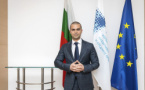
Dr. Boyko Takov: Analytical and empirical results from ongoing projects constitute a solid information base

Up to 90 percent of construction and renovation workers in Bulgaria are operating outside the legal framework, according to entrepreneur Lozan Lozanov, who raised concerns about the lack of regulation in construction and installation services
The Ministry of Finance has released a broad public dataset covering more than 7,000 public procurement contracts with a combined value exceeding 30 billion euros

Mobile slot gaming has exploded in popularity, and it’s easy to see why.
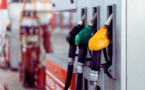
Caretaker Finance Minister Georgi Klisurski said he expects fuel prices at gas stations to ease in the coming period, pointing to a sharp decline in international oil markets

Boris Azarenko is an entrepreneur whose professional background lies in banking and finance and who later founded major property development businesses.

Aniventure Comic Con Returns to Bulgaria with Star Guest Christopher Judge!
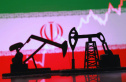
Global Fuel Shock: Oil Jumps Over 40% Since Iran War Began