Easter Monday in Bulgaria: Tradition and Family Visits
Orthodox Easter Monday is the day following Easter Sunday and is observed across Bulgaria as part of the wider Easter celebration within the Orthodox Christian tradition
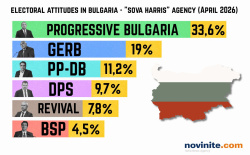
HOT: » Which party would you vote for (if you could) in the upcoming snap vote in Bulgaria on April 19?
 Send to Kindle
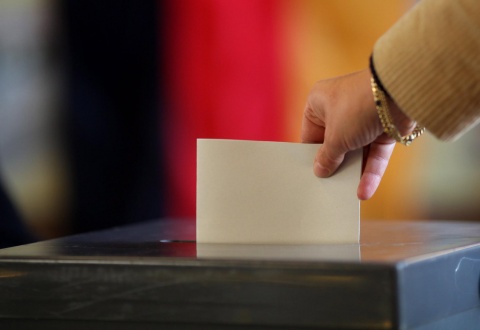 Referendums on the level of the taxes are being held in Switzerland and a few countries in Latin America. Photo by BGNES
Bulgaria, which has the lowest personal and corporate income tax in the EU at 10%, may change the levels of direct taxes after a referendum in 2013, a bill of the finance ministry suggests.
"Should the bill be adopted, the citizens will be given the power to define the government's tax policy as of 2013," Finance Minister Simeon Djankov told journalists in parliament, adding this would be a big step forward.
"This is a measure, which will show that Bulgaria is not only the country with the best financial discipline in Europe, but also the best European country with the best financial discipline," the minister commented.
Referendums on the level of the taxes are being held in Switzerland and a few countries in Latin America.
Bulgaria has the lowest personal and corporate income tax in the EU at 10%, which was introduced at the beginning of 2008, replacing the previous system, which combined several different tax rates - between 20 and 24%, depending on income.
Bulgaria also has the lowest social security rates, which coupled with a 10% flat rate, makes it very attractive for physical entities, employers and potential investors.
Bulgaria's Prime Minister Boyko Borisov has denied reports that a hike in tax rates may be looming after the government scrapped its plans for a VAT increase last year, which was hoped to plug a budget gap that has thwarted the new EU member's euro efforts.
At the beginning of 2010 the government chose to keep direct taxes unchanged as it strives to make Bulgaria more competitive in the battle for the shrinking flow of foreign investments. The increase in the indirect taxes – excise duties and VAT - seemed to be less painful.
Prime Minister Boyko Borisov and Finance Minister Simeon Djankov made it clear in April that the prospect of a hike in the value-added tax (VAT) rate, which now stands at 20%, is quite likely in a bid to shore up the budget.
Thanks to the VAT hike, the cabinet expected to collect an additional BGN 540 M of revenues by the end of the year, which would have accounted for one third of the sum, needed to patch up the budget gap.
The government however abandoned the plans for a VAT hike after representatives from all business sectors cautioned that the hike in the value-added tax in Bulgaria should be a last-ditch measure, introduced only together with an overhaul in state expenditure and structural reforms.

Orthodox Easter Monday is the day following Easter Sunday and is observed across Bulgaria as part of the wider Easter celebration within the Orthodox Christian tradition

Industrial output in Bulgaria posted a modest monthly increase in February 2026, but continued to decline sharply on an annual basis, according to preliminary, seasonally adjusted data from the National Statistical Institute.
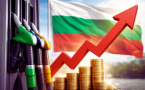
The president of the Confederation of Bulgarian Trade Unions, Plamen Dimitrov, has warned that inflation in Bulgaria is likely to exceed earlier projections, even if fuel prices begin to decline

The introduction of the euro in Bulgaria has so far produced only a limited and largely one-off effect on consumer prices, according to an analysis by the European Central Bank

Easter is the most important religious holiday in the Orthodox Christian calendar and is widely celebrated across Bulgaria. It marks the resurrection of Jesus Christ and follows the completion of Holy Week, which includes Good Friday and Holy Saturday

The Central Election Commission (CEC) in Bulgaria has confirmed that a total of 6,575,151 citizens are eligible to vote in the upcoming elections on April 19

The Ministry of Finance has released a broad public dataset covering more than 7,000 public procurement contracts with a combined value exceeding 30 billion euros
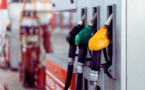
Caretaker Finance Minister Georgi Klisurski said he expects fuel prices at gas stations to ease in the coming period, pointing to a sharp decline in international oil markets
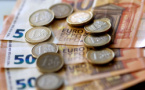
Bulgaria’s new government borrowing for 2026 has surpassed the 1 billion euro mark following the latest successful auction of state securities, according to data cited from the Bulgarian National Bank

Bulgaria recorded only a modest and one-off increase in inflation following the adoption of the euro on January 1, with the effect estimated at between 0.3 and 0.4 percentage points

Data released by the Ministry of Finance, covering budget execution for February 2026 and preliminary estimates for March 2026, indicate a marked deterioration in Bulgaria’s fiscal position

In the 2026 edition of the Index of Economic Freedom, compiled by the Heritage Foundation, Bulgaria is placed 38th out of 176 countries, positioned between Costa Rica and Oman

Aniventure Comic Con Returns to Bulgaria with Star Guest Christopher Judge!
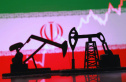
Global Fuel Shock: Oil Jumps Over 40% Since Iran War Began