The Power of Knowledge Lies in Its Use
Dr. Boyko Takov: Analytical and empirical results from ongoing projects constitute a solid information base
Business | April 9, 2026, Thursday // 18:21
HOT: » Which party would you vote for (if you could) in the upcoming snap vote in Bulgaria on April 19?
 Send to Kindle
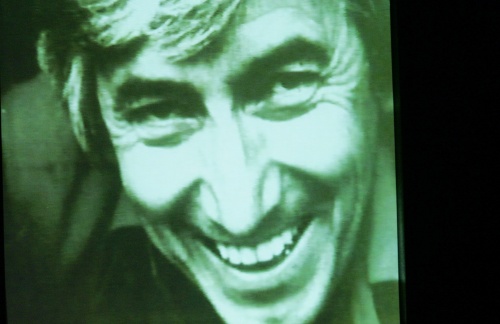 Bulgarian dissident Georgi Markov was assassinated in London 1978 by Bulgarian State Security using a poisoned umbrella. Photo by BGNES.
By Bruno Waterfield, the Daily Telegraph.
A secret Bulgarian unit known as "Service 7" was set up to "execute death sentences" on opponents to the Communist regime, secret files show.
One of the executioners, code-named "Piccadilly" is said to be the agent who carried out London's notorious killing of Georgi Markov in 1978 by using an umbrella to stab a poison filled pellet into the Bulgarian writer's leg.
The existence of the death squad, long denied by former officials, came to light after Alexenia Dimitrova, a Bulgarian journalist, discovered files accidentally released by Bulgaria's intelligence service had released under a new law declassifying former state security archives.
Bearing the acronym, OM for "ostri meropriatia" or "sharp measures", the files detail the kidnapping, discrediting and killing of Bulgarian émigrés in the 1960s and 1970s.
The records, classed as "top secret", described covert operations against people identified only by codenames such as "The Black", "Lackey", "Traitor", "Hamlet", "Betrayer" and "Widower".
In one memorandum in 1970, Angel Solakov, Bulgaria's interior minister, instructed agents to carry out killings to practise for the political assassination of Andreas Papandreou, the father of the current Greek leader, George Papandreou.
"We need to execute a death sentence. At first glance, it seems a tough and dirty job, but for us it is noble," he wrote. "I don't know whether one day we would be asked to liquidate for instance Papandreou. Now we get smaller tasks, but we should gain some experience."
When created in 1963 "Service 7", under the command of a Colonel Petko Kovachev, had only four officers but rapidly expanded, "in view of the increasing workload", to become a unit employing 39 agents within four years.
The killers were recruited from loyalists to the Communist regime.
The files show the agent, now thought to be a man called Francesco Gullino, was also involved in an operation in Italy against another Bulgarian émigré.
Another target, Traicho Belopopski, a former Bulgarian intelligence officer who had defected to Britain, narrowly escaped death by poisoning in the 1960s.
Offered Bulgarian salami by his father on a visit to London in the mid-1960s, Mr Belopopski, who was suspicious because knew the methods of his former employer, threw the sausage to a dog, which quickly died in agony.
Dr. Boyko Takov: Analytical and empirical results from ongoing projects constitute a solid information base
The European Public Prosecutor’s Office (EPPO) has carried out a series of coordinated investigative actions across several countries, including Bulgaria and Romania, as part of a probe into suspected large-scale fraud involving EU funds

Holiday weather conditions are expected to remain mixed across Bulgaria, with alternating periods of sunshine and rain showers, according to the forecast
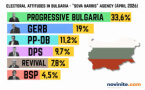
A new survey by the “Sova Harris” agency indicates that six political formations would enter the next Bulgarian National Assembly, based on data collected between April 2 and 6 among 800 respondents through standardized face-to-face interviews

Up to 90 percent of construction and renovation workers in Bulgaria are operating outside the legal framework, according to entrepreneur Lozan Lozanov, who raised concerns about the lack of regulation in construction and installation services
The Ministry of Finance has released a broad public dataset covering more than 7,000 public procurement contracts with a combined value exceeding 30 billion euros

Brazen Bulgarian gangs "terrorise the elderly and rob them over their life savings with increasingly aggressive phone scams nettling millions of euros," according to an AFP story.

The prospect of US President Donald Trump's moving closer to Russia has scrambled the strategy of "balancing East and West" used for decades by countries like Bulgaria, the New York Times says.

Bulgarians have benefited a lot from their EU membership, with incomes rising and Brussels overseeing politicians, according to a New York Times piece.

German businesses prefer to trade with Bulgaria rather than invest into the country, an article on DW Bulgaria's website argues.

The truth about Bulgaria and Moldova's presidential elections is "more complicated" and should not be reduced to pro-Russian candidates winning, the Economist says.

President-elect Rumen Radev "struck a chord with voters by attacking the status quo and stressing issues like national security and migration," AFP agency writes after the presidential vote on Sunday.

Aniventure Comic Con Returns to Bulgaria with Star Guest Christopher Judge!
Global Fuel Shock: Oil Jumps Over 40% Since Iran War Began