Caught in the Middle: Europe and the Iran Crisis
Nobody asked Europe whether it wanted this war. The US and Israel acted alone on February 28th, and the continent woke up to a crisis it had no hand in starting but now has no choice but to navigate.
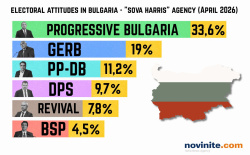
HOT: » Which party would you vote for (if you could) in the upcoming snap vote in Bulgaria on April 19?
 Send to Kindle
The recent closing down of the online library Chitanka.info, a piracy website, by the Bulgarian Unit for Combating Organized Crime prompted a mass discussion in the virtual space in Bulgaria.
After the closedown, angry users of Chitanka have dissed the Unit through comments on news articles and in different social networks. The supporters of the pirate website have “advised” the police to focus on drug dealers and killers, rather than the “people who are so good to provide us with free books”.
Bulgaria’s piracy problem is no news. The country has been under strict observation by the International Intellectual Property Alliance for years. Here is what their last report for 2009 says about Bulgaria:
“Internet piracy (both online and for the delivery of pirated hard goods) has become the most serious copyright problem in Bulgaria. While it is true that street piracy of pirated copyright materials (now mostly burned CDRs and DVD-Rs) remains a problem, that has been dwarfed by Internet piracy. The business software community continues to experience problems with end user piracy and hard disk loading. Over the past year, the film, recording, and software industries continue to report good cooperation with most Bulgarian enforcement authorities, including some major actions to take down some Torrent sites. However, there has been little progress imposing deterrent criminal sentences and civil remedies and damages, mostly due to an ineffective judiciary. Many prosecutors are well intentioned but unable to press cases forward.”
The Unit’s decision to close down Chitanka is one of the first serious actions taken towards the Internet piracy. In April, the head of Bulgaria’s Computer Crimes Department, Yavor Kolev, has stated that the two biggest torrent tracker Bulgarian websites, Zamunda.net and Arena.bg, will be closed down as well.
However, they are still active and still enjoy hundreds of thousands of users every day. In fact, according to data of the Alexa analysis agency, Zamunda.net is one of the top five websites in Bulgaria.
This data comes as no surprise, considering both the psychology of the Bulgarian nation and the economic situation in the country. The average Bulgarian cannot afford to buy an original music CD for BGN 30 or a book for BGN 20, or go to the movie theaters. Some Bulgarian towns do not even have music stores or movie theaters! So turning to the free torrent trackers is the logical choice for many Bulgarians.
I cannot help but think how na?ve U2’s Bono was in his op-ed column for the New York Times from January 2, 2010:
“The only thing protecting the movie and TV industries from the fate that has befallen music and indeed the newspaper business is the size of the files. The immutable laws of bandwidth tell us we’re just a few years away from being able to download an entire season of “24” in 24 seconds. Many will expect to get it free.”
If only Bono was aware that downloading an entire season of “24” takes less than 24 seconds in Bulgaria…
What is unimaginable for people from other countries is actually becoming more and more common in Bulgaria, where people have grown so accustomed to the Internet piracy that it has become something they cannot live without.
What is more, Bulgarians have started to believe it is their right to exchange any kind of intellectual property online, to the extend when an operation like closing down a piracy site occurs, they all attack the police, blaming the authorities for depriving them of their right of access to information.
Maybe if Bulgaria had a stricter law enforcement system, its people wouldn’t be so brave in challenging the law. Maybe, if the economic situation in the country was better, people would not be so keen on stealing other people’s intellectual property unpunished.
Bulgaria’s Western partners have piled up enormous pressure on its authorities to tackle the issue. But can you make people pay for something they can get for free? I don’t think so.
Then the only solution is for the Bulgarian authorities to take the necessary measures. Close down all pirate websites, punish the guilty ones, and leave the people with no option for stealing. If they can’t download it for free, they will sooner or later start paying for it and realize that there is no such thing as free lunch.

Nobody asked Europe whether it wanted this war. The US and Israel acted alone on February 28th, and the continent woke up to a crisis it had no hand in starting but now has no choice but to navigate.

When Russia launched its full-scale invasion of Ukraine on February 24, 2022, it did not count on one thing: that among the defenders standing in its way would be Bulgarians.

Bulgaria has a constitution, a parliament, and a president. What it has struggled to maintain, with remarkable consistency over the past decade, is an actual functioning government. Since 2021 alone, the country has cycled through five caretaker cabinets,

On the evening of December 1, 2025, Bulgaria witnessed its most significant popular mobilization since the 1990s

If we look at history, there are not many cases in which relations between Bulgaria and Russia at the state level were as bad as they are at the moment.

The term “Iron Curtain” was not coined by Winston Churchill, but it was he who turned it into one of the symbols of the latter part of the twentieth century by using it in his famous Fulton speech of 1946.

Aniventure Comic Con Returns to Bulgaria with Star Guest Christopher Judge!

Global Fuel Shock: Oil Jumps Over 40% Since Iran War Began