By Christian Davenport and Clarence Williams
Washington Post Staff Writer
Saturday, May 29, 2010
He was a charming, brilliant boy who could go on to great things if only he could get out. Sofia, Bulgaria - chaotic in the aftermath of communist rule - was stifling him.
Michael Horowitz, a U.S. official in Eastern Europe to study the effects of communism, and his wife had an idea. Come back to the States with us, they proposed. We'll get you an education. Doitchin Krasev's parents, intellectuals who wanted a better life for their son, consented.
For two years in the early '90s, Krasev lived with his surrogate parents, impressing them with his determination, reading "Tom Sawyer" with the help of a Bulgarian-English dictionary. He graduated from Georgetown Day, one of Washington's most prestigious high schools, and earned a scholarship to an elite liberal arts college.
Then he disappeared.
For more than a decade, Horowitz, general counsel at the Office of Management and Budget in the Reagan administration, and his wife, Devra Marcus, a physician, wondered what happened to him.
"One fears the worst," said Horowitz, of McLean. "Is he alive? Is he involved in crime?"
They hired detectives, but the only clues to his whereabouts came from credit card bills that occasionally came in the mail and word from a high school girlfriend, who thought he was in California.
"I love him, actually," Marcus said. "I was heartbroken. I talked to cops, patients who were cops. One said, 'He's dead, you can forget it.' I never did think he was dead. I just didn't."
Thursday evening, agents from the State Department called the house in McLean. "This is going to be one of the most amazing stories," an agent said.
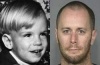
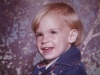
They had arrested a man who had assumed the identity of a 3-year-old boy from Ohio who was murdered in 1982. For the past few weeks, while the man has been in custody in Oregon, no one knew who he really was, and he wasn't saying.
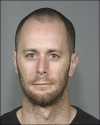
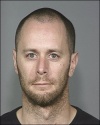
At some point, the man, who was charged last month with making false statements on a passport application, had used Horowitz's address, which led authorities to Virginia. The agents e-mailed Horowitz a photo, hoping he could identify the man. Horowitz recognized him immediately. Older now, in his 30s, but the same long face, same blue eyes: "It was Doitchin."
Out West, Krasev had apparently reinvented himself. He was engaged, Horowitz learned from Krasev's attorney. Krasev had friends and a steady job with the Oregon Liquor Control Commission. An all-American guy, with an all-American name: Jason Evers.
For years, that is how he has introduced himself, and it is what he put on his passport application. When authorities did a routine cross-check of the application against names of the deceased, they saw that someone had adopted Evers' identity.
As a teenager, Doitchin spoke four languages and could charm anyone, Horowitz said. One time at dinner at a state-run restaurant in Sofia, Horowitz had complained that all the servers were dour.
"I bet it's impossible to make this waiter smile," he recalled saying. Krasev took the challenge and ordered a bottle of wine. When the waiter opened it, the teenager poured a glass and offered it to the server.The waiter smiled.
America came as a culture shock. "When I took him to the Giant, it was as if I had taken him to Mars," Horowitz said.
But the young immigrant was determined to adapt.
Krasev would bike from McLean to Georgetown Day's Tenleytown campus, even in rain or snow. He often opted to spend hours with an English dictionary to get through reading assignments, rather than ask his surrogate parents for help.
Once he spent half an hour trying to decipher a word from "Tom Sawyer." After searching futilely, he finally went to Horowitz seeking a translation of the colloquial "wuz," which did not exist in any dictionary.
Krasev earned a scholarship to Davidson College in North Carolina. But after a short time there, he called Horowitz and Marcus to say he was going to drop out.
Horowitz drove down to talk him out of it, meeting Krasev in the pizza parlor where he worked. Horowitz thought his intervention had worked; after all, if Krasev dropped out, he would lose his student visa and risk deportation.
A few days later, Krasev called for the last time to say he was dropping out. But it took Horowitz a few moments to figure out who was on the other end of the line. Krasev had dropped his Bulgarian accent. He spoke just like an American.
*The original Washington Post title was modified by Novinite.com


 Bulgarian immigrant Doitchin Krasev had embraced the United States. Photo by Washington Post