Bulgaria’s First Immersive Art Museum Opens in Sofia
Sofia is now home to Bulgaria’s first immersive art museum
HOT: » Which party would you vote for (if you could) in the upcoming snap vote in Bulgaria on April 19?
 Send to Kindle
 PM Borisov (right) and Culture Minister Rashidov (left) present Picasso, Chagall, and Dali paintings to the future Bulgarian Louvre. Photo by BGNES
Bulgarian state leaders initiated Tuesday the construction of a brand new top museum also known as the “Bulgarian Louvre”.
The government is investing BGN 20 M in the new cultural complex which is located in the very downtown of the capital Sofia joining together the building of the National Gallery for Foreign and an old building formerly used by the Sofia Technical University.
The decision for the construction of the Bulgarian Louvre was made in December 2009. Some BGN 2.5 M of the funds for the reconstruction and construction from the EU Regional Development Operational Program.
“Let me explain to you how the economy works because you are clearly listening to one and the same “experts” who talk every day. We are investing in industry. These investments are going to provide returns in the future,” Bulgarian PM Borisov stated when asked if it was not better to freeze the construction of the museum complex because of the economic crisis.
“Culture Minister Rashidov did explain to you that 40 million people visit Florence and each of them spends EUR 100 on museum tickets there,” the Prime Minister elaborated as he and Rashidov broke the ground of the new project.
Borisov said he hoped that the Lourve will be ready by mid 2012 together with the second line of the Sofia Metro and the Sofia waste processing plant.
“We’ve got BGN 2,5 M from the EU, then there are about BGN 15 M from the state budget. This kind of money will be spent by the middle of next year. After that, we will supply however much is needed,” promised the head of the government.
As a gesture to the future top Bulgarian museum, the Bulgarian government presented it with three original paintings of Pablo Picasso, Marc Chagall, and Salvador Dali.
“We managed to get the Picasso painting very cheaply, from close friends, it is almost a donation, we hardly paid anything,” Culture Minister Rashidov explained.
Later he revealed that the government paid BGN 5 000 for the work but did not say whether it was bought from a Bulgarian or from a foreign collector.
“Let’s roll up our sleeves, and start building this nice museum. Everybody’s talking about the crisis but this construction will cost the equivalent of a Christmas bonus for state employees. But once we are done, we will have a museum standing forever,” the Minister said.
“You know that there were many attempts to turn this building into something else. They wanted to build a Turkish hotel, or a state agency office. But I am extremely happy that together with the government, as a Minister, I have helped start building a proper Bulgarian museum,” Rashidov declared. He said he hoped the new Bulgarian Louvre would spur cultural tourism.
“You know, dear friends, when you go to Florence – there are 40 million tourists there visiting five establishments, leaving behind EUR 100 each. You can calculate how much the city of Florence makes from the tourists. This is going to be a completed museum. We will not longer speak about foreign art because we are in Europe. This will be a museum of European art,” clarified the Culture Minister.

Sofia is now home to Bulgaria’s first immersive art museum

"Everyone wants positions – in regulatory bodies and ministries," he emphasized.

The original Panagyurishte Gold Treasure has made its return to Panagyurishte, Bulgaria

A temporary exhibition titled: “Trebenishte" - 105 years since the discovery of the necropolis at Trebenishte 1918 – 2023”, can be visited until March 24, 2024

Boyko Borisov chose to cast his vote with a paper ballot in Bankya today.

Ivo Atanasov, MP from "We Continue the Change" stated that he will propose to his parliamentary group to vote on the resignation of Vezhdi Rashidov as Speaker of the Parliament
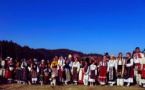
Orthodox Easter Monday is the day following Easter Sunday and is observed across Bulgaria as part of the wider Easter celebration within the Orthodox Christian tradition
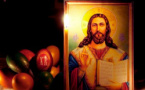
Easter is the most important religious holiday in the Orthodox Christian calendar and is widely celebrated across Bulgaria. It marks the resurrection of Jesus Christ and follows the completion of Holy Week, which includes Good Friday and Holy Saturday
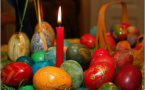
Holy Saturday, known in Bulgaria as Lazarus Saturday’s continuation of the Easter cycle, is a quiet but deeply symbolic day in the Orthodox Christian calendar
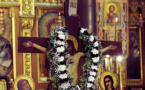
Good Friday, known in Bulgaria as Razpeti petak, is one of the most solemn and deeply observed days in the Orthodox Christian calendar
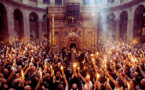
The Bulgarian Orthodox Church has decided that no official delegation will travel to Jerusalem this year to receive the Holy Fire, citing the ongoing tensions in the Middle East
Plovdiv will host the International Street Arts Festival 6Fest from April 20 to 26, 2026, turning the city into an open-air stage featuring performers from 11 countries across three continents
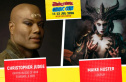
Aniventure Comic Con Returns to Bulgaria with Star Guest Christopher Judge!
Global Fuel Shock: Oil Jumps Over 40% Since Iran War Began