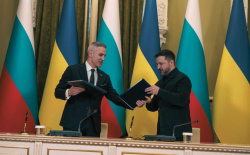
Easter Monday in Bulgaria: Tradition and Family Visits
Orthodox Easter Monday is the day following Easter Sunday and is observed across Bulgaria as part of the wider Easter celebration within the Orthodox Christian tradition
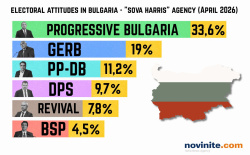
HOT: » Which party would you vote for (if you could) in the upcoming snap vote in Bulgaria on April 19?
 Send to Kindle
 Analysts warn that an imminent international sale of surplus emissions by Bulgaria could put downward pressure on carbon prices. Photo by ecovoice.com.au
by Katie Holliday
Risk.net January 28, 2010
A surplus of European Union Emission Allowances (EUAs) sales from Bulgarian companies triggered by a pending European Commission decision could put downward pressure on carbon prices, say experts.
Bulgaria is the last remaining country under the European Union Emissions Trading Scheme (EU ETS) yet to have its installations connected to the Community Independent Transaction Log (CITL).
The EC is expected to authorise the connection by mid-February and, as a result, Bulgarian companies will be able to sell their surplus of EUAs on the international carbon market.
The decision could trigger a potential influx of EUAs on the carbon markets and consequentially drive down prices, according to Emmanuel Fages at carbon project developer Orbeo. "It is probable that these installations, which are not yet connected to the CITL, have an excess of EUAs, which they have not yet sold like the others in the scheme," says Fages. "If we start seeing some flows, we might see a fall in prices."
According to Fages, the level of surplus EUAs could be substantial. "It is hard to anticipate how many sales there will be. Eastern European countries have been over-allocated, so there might be some comfortable margin for them to sell and this will have a bearish impact on prices," he says.
The CITL was connected to the United Nations' International Transaction Log at the end of 2008, linking the UN's Clean Development Mechanism with the EU ETS. The procedure involved the 27 member states of the EU disconnecting their national registries and reconnecting them to the ITL.
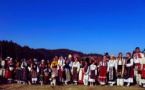
Orthodox Easter Monday is the day following Easter Sunday and is observed across Bulgaria as part of the wider Easter celebration within the Orthodox Christian tradition

Industrial output in Bulgaria posted a modest monthly increase in February 2026, but continued to decline sharply on an annual basis, according to preliminary, seasonally adjusted data from the National Statistical Institute.
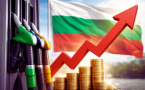
The president of the Confederation of Bulgarian Trade Unions, Plamen Dimitrov, has warned that inflation in Bulgaria is likely to exceed earlier projections, even if fuel prices begin to decline

The introduction of the euro in Bulgaria has so far produced only a limited and largely one-off effect on consumer prices, according to an analysis by the European Central Bank

Easter is the most important religious holiday in the Orthodox Christian calendar and is widely celebrated across Bulgaria. It marks the resurrection of Jesus Christ and follows the completion of Holy Week, which includes Good Friday and Holy Saturday

Holy Saturday, known in Bulgaria as Lazarus Saturday’s continuation of the Easter cycle, is a quiet but deeply symbolic day in the Orthodox Christian calendar

Brazen Bulgarian gangs "terrorise the elderly and rob them over their life savings with increasingly aggressive phone scams nettling millions of euros," according to an AFP story.

The prospect of US President Donald Trump's moving closer to Russia has scrambled the strategy of "balancing East and West" used for decades by countries like Bulgaria, the New York Times says.

Bulgarians have benefited a lot from their EU membership, with incomes rising and Brussels overseeing politicians, according to a New York Times piece.

German businesses prefer to trade with Bulgaria rather than invest into the country, an article on DW Bulgaria's website argues.

The truth about Bulgaria and Moldova's presidential elections is "more complicated" and should not be reduced to pro-Russian candidates winning, the Economist says.

President-elect Rumen Radev "struck a chord with voters by attacking the status quo and stressing issues like national security and migration," AFP agency writes after the presidential vote on Sunday.

Aniventure Comic Con Returns to Bulgaria with Star Guest Christopher Judge!
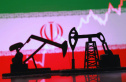
Global Fuel Shock: Oil Jumps Over 40% Since Iran War Began