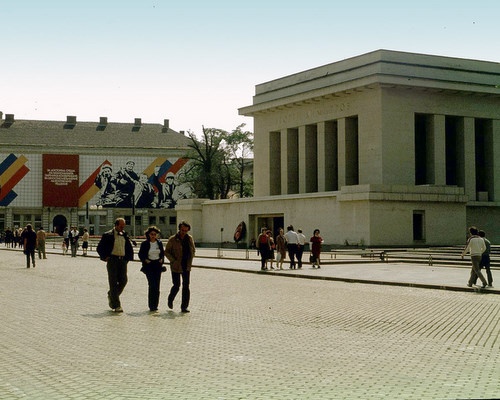
Georgi Dimitrov Mausoleum was torn down in 1999. Photo by lostbulgaria.com
The mausoleum of late communist leader Georgi Dimitrov has made its way among the nominations for Bulgaria's top building of the past century in yet another proof that Bulgarians never reconciled with their communist past and have been slow to slough it off.
Georgi Dimitrov, best known about with the Leipzig Trial, where he was tried for an alleged complicity in setting the Reichstag on fire, died in 1949 in the Barvikha sanatorium near Moscow. His body was embalmed and placed on display in the Sofia Georgi Dimitrov Mausoleum, which was torn down in 1999.
The nomination is part of the on-line and text messaging campaign organized by the Bulgarian National Television, which aims to elect Bulgaria's most important political, cultural and scientific achievements over the past century.
The list of nominations for top building of the 20th century also includes Bulgaria's only nuclear plant Kozloduy, which currently has two 1,000 MW operating units left since the closure of Soviet-designed reactors 1 to 4 was one of the conditions for its entry in the European bloc.
It also features Alexander Nevsky Cathedral, the National Palace of Culture in the center of the capital Sofia, Danube Bridge and even a whole city named after Georgi Dimitrov – Dimitrovgrad.
The winner in this category will be selected on January 28 in a broadcast aired live by the state TV channel.
Bulgarians recently named the emblematic date September 9, marking Bulgaria's anti-fascist uprising in 1944, the most important event in the country for the past century.
An appliance for roasting peppers, called "chushkopek“, was voted the most revolutionary household device of the 20th century.