Easter Monday in Bulgaria: Tradition and Family Visits
Orthodox Easter Monday is the day following Easter Sunday and is observed across Bulgaria as part of the wider Easter celebration within the Orthodox Christian tradition
HOT: » Which party would you vote for (if you could) in the upcoming snap vote in Bulgaria on April 19?
 Send to Kindle
 Plamena Mangova, Bulgarian award-winning pianist, stirs up enthusiastic audiences in Amarica. Photo by onb.be
From The Washington Post
(www.washingtonpost.com)
By Anne Midgette
Washington Post Staff Writer
Competitions are a meaningless measuring stick of a musician's talent, and yet in the absence of any other way to assess young unknown talent, we continue to treat them as if they measured something that mattered. So it was that a chief credential of Plamena Mangova, a pianist who made her North American debut at the Kennedy Center's Terrace Theater on Saturday afternoon, was a silver medalist in the 2007 Queen Elisabeth competition in Brussels. She was presented as part of the Hayes Piano Series of the Washington Performing Arts Society, which does have a pretty good track record of introducing young unknowns who go on to become older and better known.
Mangova, now 29, is Bulgarian, has been playing around Europe since she was 18, and according to her program biography has just been nominated a professor at the Queen Elisabeth Music Chapel in Belgium. These credentials are indicative of a certain authority in her musicmaking, and indeed, she plays with a great deal of authority. She has a big, generous tone, and her fingers can meet the keys with a kind of precision that launches little gestures and figures and phrases out as if they were on springs.
That authority, though, is a two-edged sword. Each time Mangova was about to launch one of these figures, she offered a figurative clearing of the throat: a little pause to underline the force of what's to come, but that ended up sapping that force by breaking up the musical line. The music stopped and started, seesawing around, the tempo buffeted by rubato. The details swamped the through-line of the pieces, particularly in the opening Chopin set of the C-sharp Minor Etude (Op. 25, No. 7) and the first Ballade in G Minor, in which I was so distracted by the effects and the start-and-stop approach that it wasn't until Mangova returned for her second piece, a very solid rendition of Scriabin's Ninth Sonata, that I realized how much I liked the tone itself. It might help if she were a little less definite -- or self-conscious -- about her interpretation.
She packed a lot into her recital. The Scriabin was followed by Ravel's "Pavane Pour Une Infante Défunte" and "Alborada Del Gracioso," which for all their sparkling moments seemed a little heavy. And the second half of the program focused on Liszt, a good fit for Mangova's pianistic ability and the firm fleetness of her fingers: first three transcriptions of Schubert songs, then the Petrarch Sonnet No. 104 and the Mephisto Waltz. The Schubert songs were quite good: short, to the point, and showcases for her ability; but the Mephisto Waltz was so episodic that it started to drag on. Mangova concluded with Ginastera's "Danzas Argentinas," allowing her to show her lighter and fiery side, and to stir up the audience, which was warmly appreciative of her power.
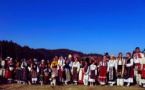
Orthodox Easter Monday is the day following Easter Sunday and is observed across Bulgaria as part of the wider Easter celebration within the Orthodox Christian tradition

Industrial output in Bulgaria posted a modest monthly increase in February 2026, but continued to decline sharply on an annual basis, according to preliminary, seasonally adjusted data from the National Statistical Institute.
The president of the Confederation of Bulgarian Trade Unions, Plamen Dimitrov, has warned that inflation in Bulgaria is likely to exceed earlier projections, even if fuel prices begin to decline

The introduction of the euro in Bulgaria has so far produced only a limited and largely one-off effect on consumer prices, according to an analysis by the European Central Bank

Easter is the most important religious holiday in the Orthodox Christian calendar and is widely celebrated across Bulgaria. It marks the resurrection of Jesus Christ and follows the completion of Holy Week, which includes Good Friday and Holy Saturday

The Central Election Commission (CEC) in Bulgaria has confirmed that a total of 6,575,151 citizens are eligible to vote in the upcoming elections on April 19

Brazen Bulgarian gangs "terrorise the elderly and rob them over their life savings with increasingly aggressive phone scams nettling millions of euros," according to an AFP story.

The prospect of US President Donald Trump's moving closer to Russia has scrambled the strategy of "balancing East and West" used for decades by countries like Bulgaria, the New York Times says.

Bulgarians have benefited a lot from their EU membership, with incomes rising and Brussels overseeing politicians, according to a New York Times piece.

German businesses prefer to trade with Bulgaria rather than invest into the country, an article on DW Bulgaria's website argues.

The truth about Bulgaria and Moldova's presidential elections is "more complicated" and should not be reduced to pro-Russian candidates winning, the Economist says.

President-elect Rumen Radev "struck a chord with voters by attacking the status quo and stressing issues like national security and migration," AFP agency writes after the presidential vote on Sunday.

Aniventure Comic Con Returns to Bulgaria with Star Guest Christopher Judge!

Global Fuel Shock: Oil Jumps Over 40% Since Iran War Began