Easter Monday in Bulgaria: Tradition and Family Visits
Orthodox Easter Monday is the day following Easter Sunday and is observed across Bulgaria as part of the wider Easter celebration within the Orthodox Christian tradition
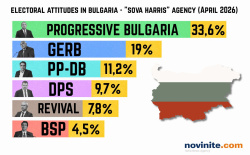
HOT: » Which party would you vote for (if you could) in the upcoming snap vote in Bulgaria on April 19?
 Send to Kindle
Bulgaria has sent a total of 13 military assistance packages to Ukraine since the start of Russia’s full-scale invasion, according to information published on the government’s public information portal. The most recent package was approved by the Council of Ministers on 12 February 2026.
Details regarding the type, scope and financial value of the aid remain classified. The Defense Ministry has stated that disclosure is not possible because the information forms part of broader reports on the structure, armament and capabilities of the Bulgarian Armed Forces in both peacetime and wartime.
February 24 marks four years since Russia launched its invasion of Ukraine in 2022, triggering the most severe conflict in Europe since World War II.
Legal Framework and Parliamentary Decisions
Sofia’s military support is provided under an agreement signed on 5 December 2022 between the Bulgarian and Ukrainian defense ministries for the free transfer of weapons, equipment and ammunition. The accord was ratified by the 48th National Assembly on 16 December 2022. Lawmakers decided at the time not to publish the list of supplied armaments in the State Gazette.
Former acting Defense Minister Dimitar Stoyanov explained that the classification of the lists was necessary because they were attached to a comprehensive report detailing the Bulgarian army’s equipment and formations.
Although the full inventory has not been made public, parliamentary decisions and occasional official statements have revealed elements of the assistance. In 2023, the National Assembly approved the provision of armored transport vehicles together with their available weaponry. It also backed the transfer of malfunctioning, surplus or excess portable anti-aircraft missile systems and various types of anti-aircraft missiles to bolster Ukraine’s air defense.
At the end of 2024, then-acting Defense Minister Atanas Zapryanov confirmed that Bulgarian self-propelled artillery systems “Gvozdika” were operating in Ukraine.
Beyond heavy equipment and ammunition, Bulgaria has supplied helmets, body armor, medical kits, winter clothing and footwear. The Defense Ministry has also supported displaced Ukrainians in Bulgaria by providing accommodation and food under the country’s humanitarian assistance program.
Compensation from Allies
In early 2025, Zapryanov announced that more than EUR 200 million had been received from the United States and the European Union as compensation for military aid. He later stated that the total compensation could exceed 400 million leva (200 million euros), and that future reimbursements, though not expected within the current year, might surpass 600 million leva (300 million euros). For 2026, additional compensation of around EUR 300 million is anticipated.
In a report published on 3 February this year marking one year of governance, the Defense Ministry said it had maintained a consistent policy of supporting Ukraine, including through military-technical assistance deemed to be in Bulgaria’s strategic interest and aligned with parliamentary decisions.
Broader European Context
Across Europe, levels of support vary. Sweden has reported military assistance to Ukraine amounting to EUR 9.7 billion since 2022. Poland announced in late January that it was preparing its 47th military aid package, valued at between EUR 220 million and EUR 230 million.
According to a study by the Kiel Institute for the World Economy cited earlier this month, overall military assistance to Ukraine declined in 2025 to €36 billion, down 14% from €41.1 billion the previous year. The report noted that support in 2025 was almost entirely provided by European countries following a reduction in US involvement.
The institute highlighted disparities among European donors. Northern European countries, representing 8% of the combined GDP of European states supporting Ukraine, accounted for 33% of military aid in 2025. In contrast, southern European countries, which make up 19% of the GDP of contributing nations, provided only 3% of the total.
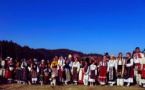
Orthodox Easter Monday is the day following Easter Sunday and is observed across Bulgaria as part of the wider Easter celebration within the Orthodox Christian tradition

Industrial output in Bulgaria posted a modest monthly increase in February 2026, but continued to decline sharply on an annual basis, according to preliminary, seasonally adjusted data from the National Statistical Institute.
The president of the Confederation of Bulgarian Trade Unions, Plamen Dimitrov, has warned that inflation in Bulgaria is likely to exceed earlier projections, even if fuel prices begin to decline

The introduction of the euro in Bulgaria has so far produced only a limited and largely one-off effect on consumer prices, according to an analysis by the European Central Bank

Easter is the most important religious holiday in the Orthodox Christian calendar and is widely celebrated across Bulgaria. It marks the resurrection of Jesus Christ and follows the completion of Holy Week, which includes Good Friday and Holy Saturday
The Central Election Commission (CEC) in Bulgaria has confirmed that a total of 6,575,151 citizens are eligible to vote in the upcoming elections on April 19
The personnel deficit in the Bulgarian Armed Forces stood at 20.5% in 2025, marking a slight improvement of 1.8 percentage points compared to the previous year, according to the Report on the State of Defence and the Armed Forces, approved by the caretake
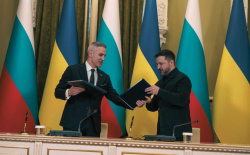
Acting Defense Minister Atanas Zapryanov has stated that Bulgaria is not taking on any military obligations under the ten-year security cooperation agreement with Ukraine
Acting defense Minister Atanas Zapryanov said that the concept of Bulgaria relying on its own defense outside a collective system would place an unsustainable burden on the country’s economy and public finances
Journalist Hristo Rimpopov told Bulgarian National Radio that there is no basis to assume Bulgaria could become a target of Iranian attacks, following confirmation by the Foreign Ministry that Tehran had sent a diplomatic note concerning the presence of U
Acting Foreign Minister Nadezhda Neynski has stated categorically that Bulgaria will not take part in any military coalition aimed at reopening the Strait of Hormuz, citing the country’s limited capabilities
The Council of Ministers has adopted the Report on the State of Defense and the Armed Forces of the Republic of Bulgaria for 2025, which was submitted to both the National Assembly and the public, outlining an overall assessment of military readiness and

Aniventure Comic Con Returns to Bulgaria with Star Guest Christopher Judge!
Global Fuel Shock: Oil Jumps Over 40% Since Iran War Began