From April 1: Major Job Cuts as Bulgaria’s Second-Largest Coal Plant Closes
The second-largest coal-fired power plant in Bulgaria
HOT: » Which party would you vote for (if you could) in the upcoming snap vote in Bulgaria on April 19?
 Send to Kindle
 Photo by BGNES
AES and ContourGlobal thermal power plants, alongside renewable energy sources, will remain the primary sources in the energy mix of Bulgaria, a recent document shows.
The lates pricing decision of energy watchdog KEVR shows that AES Martiza East 1 and ContourGlobal Maritsa East 3 sets theire share in Bulgaria's energy system at 20% and 25.2%, respectively.
Renewables, which currently produce the most expensive energy (and which has had for years to be bought under preferential conditions, in line with legislation adopted in early 2010s), form 18.8% of the mix, according to the ruling, 3e-news.net, a website specialized in energy, reported on Monday.
State-owned Maritsa Iztok 2 TPP and the Kozloduy NPP have seen a substantial decrease in their respective shares - now at 4.1% and 6.7%.
This comes, however, just after the government had explained it would take Maritsa Iztok 2 out of the regulated market.
The rest is generated by heating utilities (16.3%) and the hydropower plant owned by the National Electricity Company NEK (8.75%).
Bulgaria is trying to gradually slide toward energy market liberalization, with only household consumers currently remaining within the regulated market (only 6000 customers, in a nationl of 7.2 million, have left it as of end-July).
It is also seeking to tackle the BGN 3.7 B worth debt of NEK through a number of measures, including an increase in power prices for businesses, a measure that has been in force since August 1.

The second-largest coal-fired power plant in Bulgaria

A 23-year-old man has been detained for suspected espionage at the Bulgarian TPP "Maritsa Iztok 2"

The Kozloduy Nuclear Power Plant (NPP) in Bulgaria is set to embark on a significant transition as it begins the process of replacing Russian nuclear fuel with American fuel from Westinghouse

Amidst concerns surrounding energy security and the transition away from Russian nuclear fuel, the executive director of Bulgaria's Kozloduy Nuclear Power Plant (NPP), Valentin Nikolov, has reassured the public that there is no risk of operational disrupt
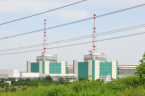
Bulgaria and the United States have formally sealed an agreement to collaborate on the construction of two new units at the Kozloduy Nuclear Power Plant

Energy expert Ivan Hinovski has issued a stark warning about Bulgaria's future energy prospects, highlighting the imminent threat of losing all base capacities by 2038
Bulgaria’s fuel market has recorded a sharp upward shift since the outbreak of the war in Iran, with diesel and petrol prices rising significantly across the country
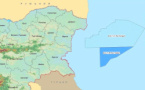
The second exploration drilling in the Krum-1 area of the Khan Asparuh block in Bulgaria’s Black Sea has also failed to identify commercially significant natural gas deposits, according to OMV Petrom

The Ombudswoman institution has voiced strong opposition to the proposed increase in heating prices in Sofia, which is expected to approach nearly 30 percent
The Energy and Water Regulatory Commission (EWRC) in Bulgaria has set the price of natural gas for April 2026 at 34.27 euros per megawatt-hour, excluding access, transmission, excise duties and VAT
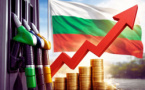
Fuel prices in Bulgaria have recorded a sharp upward movement over the past month, with diesel showing the most significant increase, according to data from the Fuelo platform
Bulgargaz has defended its previously submitted proposal for a 5% rise in natural gas prices for April before the Energy and Water Regulatory Commission, with CEO Veselin Sinabov stressing that there is currently no justification for any further increases

Aniventure Comic Con Returns to Bulgaria with Star Guest Christopher Judge!

Global Fuel Shock: Oil Jumps Over 40% Since Iran War Began