Easter Monday in Bulgaria: Tradition and Family Visits
Orthodox Easter Monday is the day following Easter Sunday and is observed across Bulgaria as part of the wider Easter celebration within the Orthodox Christian tradition
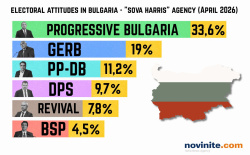
HOT: » Which party would you vote for (if you could) in the upcoming snap vote in Bulgaria on April 19?
 Send to Kindle
 File photo
Natural Gas Europe pointed to the clashing gas hub ambitions of Bulgaria and Greece in a publication, which was released on Monday.
The publication starts by stating that Bulgaria and Greece have in the past few years demonstrated a will of combining forces and considered themselves as integral parts of a wider interconnected gas transit system.
At present, it was becoming evident that the two countries have diverging viewpoints and strategies, which will eventually clash as the two counties compete for obtaining natural gas hub presence in the Balkans.
In the view of Natural Gas Europe, Greece is actively promoting both the Trans-Adriatic Pipeline (TAP) and the substitute of the cancelled South Stream – Turkish Stream.
The country is also airing the idea of resurrecting the Italy-Greece Interconnector (ITGI), which was initially projected to bring gas from Azerbaijan through western Greece to southern Italy via the Adriatic Sea.
Greek authorities propose for Turkish Stream to pass through the country as “Greek Stream” and then it will diverge into two branches – one main route towards the north via Macedonia and Serbia and another one towards Italy, which is to connect with the ITGI.
The publication reveals that ITGI is eligible for funding under the EU's Projects of Common Interest (PCI) and half of it is already owned by the Italian Edison, a subsidiary of French EDF.
The majority of the Turk-Greek stream will be directed towards the Austrian gas hub of Baumgarten, but it will also supply the traversing countries of the Balkans and Hungary as well as the market in northern Italy.
Greek Energy Minister Panayiotis Lafazanis considers that this will boost the ambition for Greek gas hub in the north of the country due to the simultaneous introduction of TAP and LNG.
The city of Thessaloniki has been identified as the likely location of the hub, where Greek Stream will diverge into its two proposed routes.
At the same time Bulgaria has its own priorities, which are opposite to the Greek ones with the idea for reviving the Nabucco project for bringing gas from Iran to Europe.
This can become a viable option in case the embargo is lifted and Iranian President Hassan Rouhani succeeds in convincing the country's establishment to export gas to Europe.
The Bulgarian Embassy in Tehran has led the dialogue, while the government in Sofia is eager to contact Rouhani.
Meanwhile, Bulgaria is attempting to construct the necessary gas hub infrastructure, which requires underground storage facilities and new transmission networks.
The country is relying on being granted funding under the EUR 315 B Investment Plan of European Commission President Jean-Claude Juncker.
Despite the diverging aims of both countries, there are increased efforts to construct the interconnector between Bulgaria and Greece.
At the same time, an agreement has also been reached on the Vertical Gas Corridor together with the governments of Romania and Hungary.
The publication concludes that in line with the unstable international climate in Eurasia and the clashes between global energy systems the two countries are investing efforts to acquire a leading position in the gas hub race within the EU.
At the end a warning is issued that both countries fail to recognise that their competition will be beneficial to Turkey, which strengthens its position as the unchallenged gas hub.
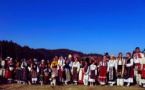
Orthodox Easter Monday is the day following Easter Sunday and is observed across Bulgaria as part of the wider Easter celebration within the Orthodox Christian tradition

Industrial output in Bulgaria posted a modest monthly increase in February 2026, but continued to decline sharply on an annual basis, according to preliminary, seasonally adjusted data from the National Statistical Institute.
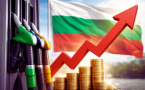
The president of the Confederation of Bulgarian Trade Unions, Plamen Dimitrov, has warned that inflation in Bulgaria is likely to exceed earlier projections, even if fuel prices begin to decline

The introduction of the euro in Bulgaria has so far produced only a limited and largely one-off effect on consumer prices, according to an analysis by the European Central Bank
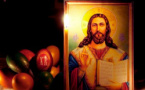
Easter is the most important religious holiday in the Orthodox Christian calendar and is widely celebrated across Bulgaria. It marks the resurrection of Jesus Christ and follows the completion of Holy Week, which includes Good Friday and Holy Saturday

The Central Election Commission (CEC) in Bulgaria has confirmed that a total of 6,575,151 citizens are eligible to vote in the upcoming elections on April 19
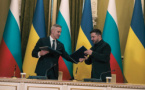
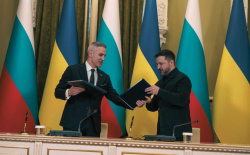
Acting Prime Minister Andrey Gyurov flew to Kyiv, signed a 10-year defense cooperation agreement with Volodymyr Zelensky, and flew back

Ask any older Bulgarian about Baba Vanga and brace yourself. You will not get a Wikipedia summary. You will get a story. Their story, or their mother's, or their neighbor's cousin

Before dawn on February 28, 2026, explosions tore through Tehran. Air raid sirens followed seconds later, but by then the first wave of strikes had already hit.
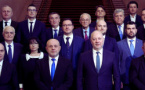
It was supposed to last four years. It lasted just 399 days - 70 of them spent in caretaker status after the prime minister's own resignation.

The appointment of Andrey Gyurov as Bulgaria's caretaker prime minister shows what's really happening in Bulgarian politics right now. Behind the constitutional formalities, a coalition against corruption is taking shape before April's elections.

On 20 October 2025, on the occasion of Deepavali, the great Indian festival of lights, Prime Minister Narendra Modi, speaking from aboard India’s first indigenously built aircraft carrier INS Vikrant, drew attention to the centrality of the Indian Ocean i

Aniventure Comic Con Returns to Bulgaria with Star Guest Christopher Judge!
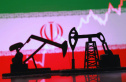
Global Fuel Shock: Oil Jumps Over 40% Since Iran War Began