The Geopolitical Choreography of Kosovo’s Local Elections: How Serbia’s Interference Threatens National Security
The significance of Sunday's local elections (October 12) goes far beyond a political competition for the governance of municipalities
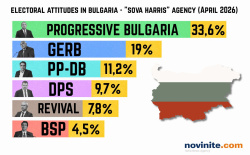
HOT: » Which party would you vote for (if you could) in the upcoming snap vote in Bulgaria on April 19?
 Send to Kindle
 Incumbent Hashim Thaci is seeking a third term as Prime Minister. Photo by EPA/BGNES
Kosovo is holding early elections on Sunday.
The snap elections were called in May after Serb lawmakers blocked a vote on establishing a national army. The vote was originally scheduled for November.
Prime Minister Hashim Thaci's Democratic Party of Kosovo (PDK) is hoping to win the elections, its main rival being the Democratic League of Kosovo (LDK) of Isa Mustafa, according to reports of the BBC News.
A victory of PDK will give Thaci a third term in office.
A total of 1,782,454 eligible voters will be able to cast ballots to elect 120 Members of Parliament for 3-year terms in office.
The threshold to enter parliament is 5% for political parties and 7% for coalitions, according to inserbia.info.
Kosovo's Parliament has 20 seats reserved for minority communities, including 10 for Kosovo Serbs and 10 for the Roma, Ashkali, Egyptian, Bosniak, Turkish and Gorani communities.
The early elections are taking place amid a difficult economic situation, including an official unemployment rate of around 35% and youth unemployment of 55%. Nearly 50% of Kosovo's 1.8 million people are considered to be poor and 12% live in extreme poverty.
Although Serbian authorities still reject Kosovo's independence, they have encouraged the ethnic Serb community to take part in the elections in a bid to strengthen the 2013 EU-brokered deal aiming to normalize relations between the two countries.
Serbian Prime Minister Aleksandar Vucic has said it would "unwise" for the Serbs to abstain from the vote.

The significance of Sunday's local elections (October 12) goes far beyond a political competition for the governance of municipalities

A Bulgarian military contingent is departing to take part in NATO's Stabilization Force operation in Kosov

An ICJ decision that ignited the geopolitical calculations of the Serbo‑Russian axis

Kosovo's Prime Minister Albin Kurti, leading the Self-Determination Movement (Vetevendosje), has secured a victory in the country's recent parliamentary election.

Holders of Serbian passports issued by the Coordination Service of Serbia in Kosovo can now travel to European Union countries without the need for a visa

A new contingent from the Armed Forces of the Republic of Bulgaria has commenced its mission as part of the NATO Stabilization Force in Kosovo
NEW POLL: HUNGARIANS UNITED ON NEED FOR A ‘DIFFERENT’ RELATIONSHIP WITH THE EU, BUT DIVERGENCES REMAIN ON UKRAINE
The Kremlin has announced that Russian President Vladimir Putin has ordered an “Easter ceasefire” in the war in Ukraine, declaring a temporary halt in hostilities lasting around 36 hours
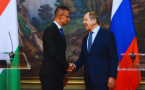
A group of Members of the European Parliament has raised concerns over the potential leakage of confidential EU information to Russia, urging stronger safeguards within the European Parliament
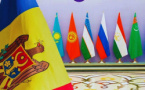
Moldovan President Maia Sandu has formally enacted legislation withdrawing the country from the Commonwealth of Independent States (CIS), marking a decisive step in Chisinau’s gradual disengagement from Russian-led structures
The European Public Prosecutor’s Office (EPPO) has carried out a series of coordinated investigative actions across several countries, including Bulgaria and Romania, as part of a probe into suspected large-scale fraud involving EU funds
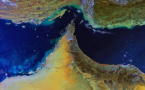
A fragile ceasefire between the United States and Iran has coincided with escalating tensions over the Strait of Hormuz, where Iran has moved to tighten control over one of the world’s most critical maritime routes

Aniventure Comic Con Returns to Bulgaria with Star Guest Christopher Judge!
Global Fuel Shock: Oil Jumps Over 40% Since Iran War Began