Emmanuel Macron Issues Warning to Europe, Urges Strategic Reboot
French President Emmanuel Macron issued a stark warning to Europe, urging the continent to confront the challenges of a rapidly changing world
 Send to Kindle
 @ClubZ
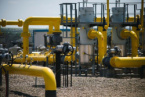
Between January and October 2022, Europeans bought more Azerbaijani gas than in the whole of 2021. About 9.3 billion cubic meters were exported to the member states of the European Union in ten months, writes the French newspaper "Les Echos".
"We expect to reach close to 12 billion cubic meters by the end of the year, mainly for Italy, Greece and Bulgaria," says Elnur Soltanov, Azerbaijan's deputy energy minister. "This would represent a 31% year-on-year increase."
In July, European Commission President Ursula von der Leyen visited Azerbaijan to persuade Baku to supply more gas to Europe to cope with a collapse in Russian exports following the invasion of Ukraine. Von der Leyen and Azerbaijani President Ilham Aliyev agreed to double "within a few years" the volume of gas sold to Europe from Baku. The goal is to reach 20 billion cubic meters per year from 2027. However, this number is relatively small compared to the 155 billion cubic meters of Russian gas imported by the EU in 2021, before the war.
"Does Azerbaijan have enough reserves? The answer is yes. The Shah Deniz gas field in the Caspian Sea alone has 1,200 billion cubic meters of natural gas, and the potential of Azerbaijan as a whole is estimated at 2,600 billion cubic meters," says Soltanov.
Aliyev assured in early October that his administration had begun consultations with its partners to double the capacity of the Trans-Anatolian Gas Pipeline (TANAP) running through Turkey and the Trans-Adriatic Gas Pipeline (TAP) serving Greece, Turkey, Albania and Italy. The flow rate of TANAP, which today is limited to 16 billion cubic meters per year, will increase to 32 billion cubic meters when that of TAP reaches 20 billion cubic meters.
Near Baku, the Shah Deniz field supplies most of Azerbaijan's gas. It is managed by a consortium whose main shareholders are "British Petroleum" (about 30%) and entities related to the Azerbaijani state with up to 21%. The third largest investor is the Russian company "Lukoil" with 19.99% of the shares.
According to Soltanov, the participation of the Russian company does not seem to bother the European Commission, "Les Echos" notes.
The newspaper notes that in September there was a question in the French Senate to the Minister of Foreign Affairs Catherine Colonna on the matter and it did not receive a clear answer.
However, Soltanov denies that Russian participation creates a problem:
"Russia is one of our very big neighbors... On the topic of energy, we have exchanges from time to time, as we always have. 30 years ago we were part of the same country. The infrastructures were interconnected to the highest degree. But it is wrong to say that significant quantities of Russian hydrocarbons are transiting through Azerbaijan."
Follow Novinite.com on Twitter and Facebook
Write to us at editors@novinite.com
Информирайте се на Български - Novinite.bg
/ClubZ
We need your support so Novinite.com can keep delivering news and information about Bulgaria! Thank you!

French President Emmanuel Macron issued a stark warning to Europe, urging the continent to confront the challenges of a rapidly changing world

In a significant development, the Russian army has seized control of the pivotal village of Ocheretyne in the Donetsk region of Ukraine, a strategic location crucial for Ukrainian defense efforts

Concerns are mounting within the European Parliament regarding potential Russian interference in the forthcoming parliamentary elections, coupled with apprehensions surrounding Russian-owned properties in Bulgaria

A dire situation looms over European airspace as thousands of passenger planes, predominantly ferrying tourists, find themselves ensnared in a perilous web of Russian jamming attacks, leaving them disoriented and vulnerable mid-flight.

The Ukrainian city of Odesa has once again come under attack by Russian drones, leaving a devastating toll on civilians

According to an article in "Politico," Russian-funded disinformation campaigns are contributing to a decline in public support for Bulgaria's adoption of the euro

The Nuclear Regulatory Agency (NRA) has greenlit the phased transition to a new type of nuclear fuel for Unit 5 of Kozloduy Nuclear Power Plant (NPP), manufactured by Westinghouse

In a bid to enhance its energy security and diversify its gas supply sources, Bulgargaz is gearing up for the first deliveries of liquefied gas through the Alexandroupolis terminal, set to commence in May

The Greek national electricity company, PPC, has announced plans to acquire 500 megawatts of photovoltaic capacity in Bulgaria
Oil prices have surged due to renewed concerns about the Middle East conflict. Brent crude futures increased by 0.32% to 90.80 USD per barrel, while American WTI crude rose by 0.3% to 86.50 USD per barrel

Bulgaria's state-owned energy company, "Bulgargaz," has suffered a significant setback, losing 27% of its market share as a result of a contract with the Turkish company "Botas"

A remarkable shift in Bulgaria's energy landscape has been unveiled in the latest report from the Commission for Energy and Water Regulation, submitted to the Bulgarian parliament

UN Happiness Report: Bulgaria's Astonishing Leap in Rankings

Bulgaria: 3 Regions With Lowest Life Expectancy - EU Report 2022