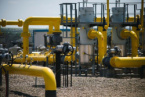
European Commission Grants Greece 1 Billion Euros for Renewable Energy Projects
With the aim to bolster renewable energy infrastructure, the European Commission has greenlit funding of 1 billion euros for two key projects in Greece
 Send to Kindle
 Photo by BGNES
The ambassadors of Italy, Korea, and the US have opposed a set of Energy Act amendments in a letter to Bulgarian Prime Minister Boyko Borisov and Energy Minister Temenuzhka Petkova.
The legislative changes passed first reading in Parliament on Tuesday.
According to the three ambassadors, as cited by dnevnik.bg, Bulgaria is heading in the wrong direction and the measures will harm the interests of investors and result in a deterioration of the business environment.
They say that the legislative changes, which are to have a retroactive effect, do not solve existing problems but rather create new ones and they have to be voted down.
“Hundreds of millions of euro was invested in the Bulgarian economy in the form of renewable energy projects built by investors from our countries,” the envoys say, stressing that the green energy plants contributed to the energy security and independence of Bulgaria.
The diplomats claim that the assumption that renewable energy producers have been granted too many preferences is a misunderstanding.
They point out that a large part of the investors have not received dividends from their investments in Bulgaria until now.
The measures will have a detrimental effect on the financial condition of the companies in the renewable energy sector and will endanger investments, the three ambassadors say.
The envoys warn that the retroactive application of measures will cause the business climate, which has been unfavorable for the past three years, to deteriorate further.
They remind that retroactively applied measures have been blocked by court before.
Some of the measures create uncertainty among current and potential investors and imply risks of unequal treatment, the ambassadors say.
They insist that a central part of any reform must be to make sure that the energy watchdog is independent and free from external influence.
The letter concludes that the legislative changes will inflict inestimable damage on the investment climate in Bulgaria.
One day ago, the legislative changes were condemned by several associations of foreign investors in Bulgaria, including Advantage Austria in Bulgaria, the American Chamber of Commerce in Bulgaria, The British Bulgarian Business Association, and Confindustria Bulgaria.
Renewable energy producers in Bulgaria have also expressed their disapproval of the legal amendments.
We need your support so Novinite.com can keep delivering news and information about Bulgaria! Thank you!

With the aim to bolster renewable energy infrastructure, the European Commission has greenlit funding of 1 billion euros for two key projects in Greece

Professor Daniela Bobeva, speaking ahead of the annual scientific conference on Economic Development and Policies, highlighted Bulgaria's advancements in the green transition

Boyko Borisov chose to cast his vote with a paper ballot in Bankya today.

Former Prime Minister Boyko Borissov announced that he had been summoned for questioning by caretaker Interior Minister Boyko Rashkov over alleged threats made to a Bulgarian businessman.

Resigned PM Boyko Borisov has appeared for the first time in months in front of the media.

With a surprise leave, the newly resigned prime minister Borisov avoided the hearing from the new parliament.

The Nuclear Regulatory Agency (NRA) has greenlit the phased transition to a new type of nuclear fuel for Unit 5 of Kozloduy Nuclear Power Plant (NPP), manufactured by Westinghouse

In a bid to enhance its energy security and diversify its gas supply sources, Bulgargaz is gearing up for the first deliveries of liquefied gas through the Alexandroupolis terminal, set to commence in May

The Greek national electricity company, PPC, has announced plans to acquire 500 megawatts of photovoltaic capacity in Bulgaria

Oil prices have surged due to renewed concerns about the Middle East conflict. Brent crude futures increased by 0.32% to 90.80 USD per barrel, while American WTI crude rose by 0.3% to 86.50 USD per barrel

Bulgaria's state-owned energy company, "Bulgargaz," has suffered a significant setback, losing 27% of its market share as a result of a contract with the Turkish company "Botas"

A remarkable shift in Bulgaria's energy landscape has been unveiled in the latest report from the Commission for Energy and Water Regulation, submitted to the Bulgarian parliament

UN Happiness Report: Bulgaria's Astonishing Leap in Rankings

Bulgaria: 3 Regions With Lowest Life Expectancy - EU Report 2022