Winter Tourism: 1.8 Million Visit Bulgaria
Bulgaria has witnessed a bustling winter tourism season, with a total of 1.8 million tourists gracing its picturesque landscapes from December 1 to March 25
 Send to Kindle
 File photo
Bulgaria’s GERB party, tipped to win the most votes in next month’s election, has said it plans to allow local governments to collect personal income tax of up to 2% if it comes to power.
Currently, Bulgarians pay flat income tax rate of 10% collected by the National Revenue Agency and channeled into the central government budget.
Presenting its election programme for October 5 snap vote on Thursday, GERB said the proposal aims to boost fiscal decentralisation and help municipal authorities raise additional funds for pursuing their own economic policies while the central government will keep unchanged the current flat rate of 10%.
Vladislav Goranov, a former deputy finance minister in GERB’s government (2009-2013) and a GERB nominee for member of next Parliament, told reporters that local governments would be able to set additional tax on personal incomes varying from zero to 2% that would enter municipal budgets.
A range for the proposed additional income tax, however, is not mentioned in GERB’s election programme.
According to Goranov, the idea is to let local governments choose whether to stick to the 10% flat income tax to attract investment to their municipalities, or collect more money, for example in cities with low unemployment rates. With Bulgaria facing local elections next year, introducing additional income tax of up to 2% will be just an option for local governments.
The idea is somewhat different from what the National Association of Municipalities in Bulgaria has called for.
Trud daily quoted Emil Savov, deputy executive director of the association, as saying it has always insisted the central government gave one-fifth of collected personal income tax revenue directly to local governments. While GERB’s proposal is yet to be discussed, it is better to avoid raising personal income tax, Savov opined.
Introduction of the proposed tax hike will face several hurdles, including inconsistencies in Bulgarian taxpayers’ address registration, dnevnik.bg commented.
We need your support so Novinite.com can keep delivering news and information about Bulgaria! Thank you!

Bulgaria has witnessed a bustling winter tourism season, with a total of 1.8 million tourists gracing its picturesque landscapes from December 1 to March 25

The Varna Court of Appeal has upheld a life sentence for the horrific murder of Silvia S., a woman from the Shumen village of Chernoglavtsi, marking a tragic end to a story of domestic violence that gripped the nation

Bulgaria's long-anticipated entry into the Eurozone may face a delay, as the country is unlikely to meet the inflation criterion required for the introduction of the euro on January 1, 2025

In a bid to support its agricultural sector amidst the ongoing tensions stemming from Russia's war against Ukraine, Bulgaria announces a significant aid package for farmers

In a recent interview with BTA, Associate Professor Angel Kunchev, the chief state health inspector, addressed the potential declaration of an epidemic of whooping cough and outlined the measures that would be taken in response

Barbara Leaf, the US Assistant Secretary of State for Middle East Affairs, criticized the Yemeni Houthis for their inhumane actions in capturing merchant ships, including the "Galaxy Leader"
Bulgaria's long-anticipated entry into the Eurozone may face a delay, as the country is unlikely to meet the inflation criterion required for the introduction of the euro on January 1, 2025

The price of retail lamb in Bulgaria has surged by 8.4% on an annual basis, according to statistics released by the Ministry of Agriculture and Food, with data sourced from SAPI indicating an average price of BGN 25.27 per kilogram as of April 10

According to recent data from the Confederation of Independent Trade Unions of Bulgaria (CITUB), the financial strain on Bulgarian households continues to intensify

Experts suggest that Bulgaria's admission to the Eurozone is more realistic in January 2026
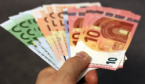
February witnessed a surge in remittances from Bulgarians residing abroad, reaching a remarkable EUR 110.5 million, marking the highest value since last July

Amidst financial fluctuations and strategic fiscal decisions, Bulgaria's Minister of Finance, Lyudmila Petkova, unveils the nation's robust fiscal reserve, standing tall at BGN 10.9 billion as of April 18th

UN Happiness Report: Bulgaria's Astonishing Leap in Rankings

Bulgaria: 3 Regions With Lowest Life Expectancy - EU Report 2022