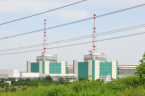
Westinghouse Electric is expected to sign a deal in the coming days to construct a nuclear reactor for Bulgaria's Kozloduy NPP, reports Nikkei Asian Review.
The US-based subsidiary of Japan's Toshiba group is in the final stages of negotiations on a basic agreement with Bulgarian Energy Holding for a reactor with an output between 1 M kilowatts and 1.2 M kilowatts.
The facility, Unit 7 of Kozloduy NPP, would likely go online around 2025.
The price tag of the project is estimated at around USD 4.87 B, and Westinghouse may also gain a stake in a nuclear power subsidiary of the Bulgarian company. An agreement could be reached later this week.
The project would mark the first such order for a Japanese enterprise in Eastern Europe and comes as players including Toshiba, Hitachi and Mitsubishi Heavy Industries seek new opportunities abroad amid decreased domestic demand since the March 2011 earthquake and tsunami. Westinghouse built a Yugoslavian facility that went online in 1983, long before the company was acquired by Toshiba.
Aiming to rely less on natural gas imports from Russia, Eastern European countries are pursuing energy policies that call for more nuclear power. Bulgaria, Lithuania and others plan new facilities, while construction is already underway in countries like Romania and Slovakia, according to the Japan Atomic Industrial Forum.
More than 100 new reactors are planned across the globe. About 40% are concentrated in China and Russia, where Japanese companies face stiff competition from local players. The other 60% are spread across Europe, Asia and the Middle East.
Some nations, like Germany, have declared an intention to end reliance on the atom. But many others, including France and the UK, are actively promoting nuclear energy. In the UK, Toshiba has received orders for three reactors, and Hitachi for four to six. Mitsubishi Heavy is to build four in Turkey.


 File photo