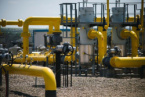
European Commission Grants Greece 1 Billion Euros for Renewable Energy Projects
With the aim to bolster renewable energy infrastructure, the European Commission has greenlit funding of 1 billion euros for two key projects in Greece
 Send to Kindle
 Photo by vesti.bg
An irrigation system running renewable energy developed by a Bulgarian company sparked interest from Qatar, Nigeria and Ethiopia.
A prototype of the system has already been installed and is functioning in the southeastern village of Polyana, Yambol district, where the technology services a farm of 50 decares, according to reports of Capital daily.
The irrigation system is an installation of solar panels or windmills which supply energy to the pumps extracting water from the ground, thereby saving electricity costs and the need to access energy infrastructure.
The system was built by an engineering team of the company Green Technologies Industry with EU funding under operational program "Competitiveness" amounting to BGN 300 000.
The irrigation system was exhibited at an international forum in March, after which international entities expressed interest, according to Martin Ganev, a member of the team which created the device.
In an interview for Capital daily, Ganev explained that the efforts of the company in 2014 would be focused on the commercialization of the innovation so as to make it more affordable for agricultural producers.
He informed that the current price tag of the technology amounted to BGN 10 000 - BGN 100 000.
Ganev was positive that the technology would be used extensively in 6-7 years' time, adding that it would prove its efficiency and economic viability in the conditions of constant climate changes on a global scale.
We need your support so Novinite.com can keep delivering news and information about Bulgaria! Thank you!

With the aim to bolster renewable energy infrastructure, the European Commission has greenlit funding of 1 billion euros for two key projects in Greece

Professor Daniela Bobeva, speaking ahead of the annual scientific conference on Economic Development and Policies, highlighted Bulgaria's advancements in the green transition

In 2018, renewable energy accounted for 21% of the total energy used for heating and cooling in the European Union (EU).

Apple Environmental Policy Director Lisa Jackson intends to leverage the iPhone manufacturer's influence for more recycled materials and renewable energy.

Bulgarian naval forces will receive a wide range of diving equipment and unmanned underwater vehicles, the press service of the Navy headquarters in Varna announced, reports Darik.

An over optimistic scenario for the completion of the Struma highway described the Minister of Regional Development Nikolay Nankov in the parliament, reports mediapool.

Trade relations between Bulgaria and Ukraine have reached unprecedented heights, with bilateral trade hitting a record 3 billion USD in 2022, according to statements made during the recent Bulgarian-Ukrainian business forum

As of 2022, the count of fellow countrymen who purchased real estate overseas reached 2,154, based on data from the National Revenue Agency referenced by "Telegraph"

Bulgaria's long-anticipated entry into the Eurozone may face a delay, as the country is unlikely to meet the inflation criterion required for the introduction of the euro on January 1, 2025

FlixBus, the renowned European bus company, is set to launch new routes to and from Bulgaria in anticipation of the summer season

In a significant development, the Russian army has seized control of the pivotal village of Ocheretyne in the Donetsk region of Ukraine, a strategic location crucial for Ukrainian defense efforts

The price of retail lamb in Bulgaria has surged by 8.4% on an annual basis, according to statistics released by the Ministry of Agriculture and Food, with data sourced from SAPI indicating an average price of BGN 25.27 per kilogram as of April 10

UN Happiness Report: Bulgaria's Astonishing Leap in Rankings

Bulgaria: 3 Regions With Lowest Life Expectancy - EU Report 2022